Brownfield Redevelopment: Benefits for Communities
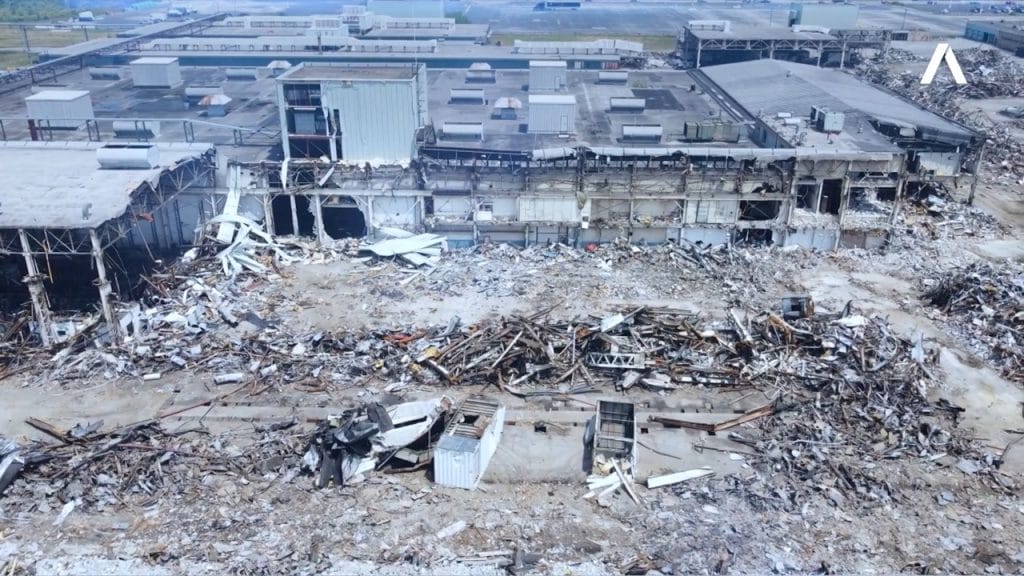
Across the country, brownfield redevelopment is giving shuttered factories and fallow industrial lands new life as advanced data centers. Unlike previously undeveloped “greenfield” land, brownfield sites have often sat idle for years, if not decades, hurting local tax bases and dragging down surrounding property values. Aligned Data Centers uses this approach to return dormant properties to productive use and support local communities.
When selecting a site, Aligned focuses on former brownfield industrial properties like decommissioned power plants, factories, or other large scale industrial facilities that already have utilities and zoning in place. Cleaning up and redeveloping these brownfield locations can bring new jobs, tax revenue, and environmental renewal to the community.
What Is Brownfield Redevelopment and How Does it Work?
Brownfield redevelopment means taking abandoned, often polluted industrial lands and repurposing them for new uses. These sites frequently have residual contamination from heavy manufacturing or energy generation. Redeveloping them requires careful cleanup of soil and water, making them productive again. For example, Aligned’s site in Perkins Township, Ohio, was a 129-acre General Motors ball-bearing plant that had sat idle for six years before Aligned began rehabilitating the site and rebuilding it into a modern data center campus.
In Maryland, Aligned’s Frederick County campus sits on the old Alcoa Eastalco aluminum smelting plant, which was operational for over 35 years before closing in 2010. In Utah, the company’s West Jordan campus is on the site of the former Fairchild semiconductor fabrication plant built in the late ‘70s that had sat empty for more than five years. In Ohio, Aligned’s Conesville campus reclaims a defunct coal burning power plant site. Each project required significant remediation work to remove contaminants and prepare the land for safe, future use.
By recycling these used lands, communities avoid losing untouched green areas so important to quality of life. Brownfield redevelopment projects clear toxic remnants, reduce blight, and create higher-value uses. The U.S. Environmental Protection Agency (EPA) supports turning brownfields into productive sites because it improves property values and local health. Projects like these transform what are often neighborhood eyesores into community assets, bringing significant tax revenue, jobs, and a cleaner environment.
Economic Benefits of Brownfield Redevelopment
Data center developments can support local economies by creating demand for construction and skilled trades. In Ohio, redevelopment of the former GM plant in Perkins Township is expected to employ hundreds of local workers over several years. Roles include project managers, ironworkers, electricians, plumbers, HVAC installers, drywallers, heavy equipment operators, and landscapers.
After construction is complete, data centers continue to create permanent jobs in critical facility operations, mechanical systems, physical security, maintenance, engineering, and campus operations.
In Arizona, former industrial sites, including a Honeywell plant in Phoenix and a Motorola semiconductor manufacturing facility in Chandler, have been redeveloped into data center campuses requiring full-time, year-round employees.
In communities such as Perkins Township, local officials have already seen clear benefits. Aligned has invested in local schools, the township, and its career center. Over time, tax revenue from the data center will continue to help fund community needs.
Across the country, these projects deliver billions of dollars in local investment and can help stabilize municipal tax bases. This investment can finance infrastructure upgrades and public services, including schools, police, fire stations, emergency services, and healthcare facilities.
How Brownfield Data Centers Support Local Infrastructure
Brownfield data center projects can support grid upgrades when developers fund new substations, transformers, and related infrastructure. These investments can add capacity and support grid stability for neighboring residents and businesses.
The sites Aligned picks already have high-capacity power lines from their bygone industrial days. Aligned taps existing substations and often builds new transformers or backup generators on-site. These project-specific upgrades are funded by Aligned rather than through direct project charges to residents. Aligned coordinates with local utilities to support reliable service for surrounding homes and businesses.
Water-Efficient Brownfield Data Center Development
Data centers are often portrayed as water-intensive, but design choices can significantly reduce water demand. Aligned minimizes water use through efficient cooling technology, waterless heat rejection, and a closed-loop design. The closed-loop system recycles and reuses water for cooling, reducing environmental impact. In practice, this can result in substantial water savings compared with sites’ prior industrial uses.
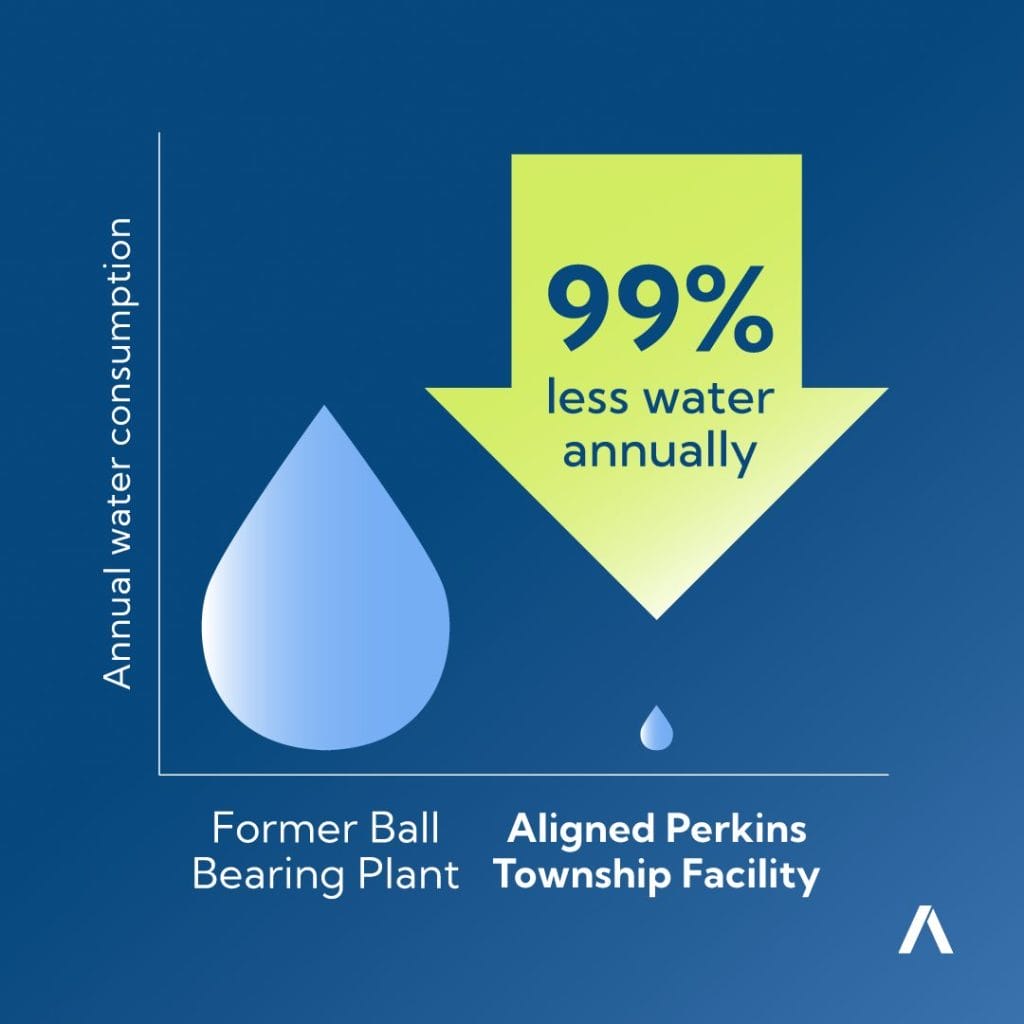
For example, in Perkins Township, Aligned expects 99% less water use and discharge than the manufacturing facility once used. Similarly, in Glendale, Arizona, where the site was a former rose farm, Aligned projects a 73% annual reduction in water use versus the farm’s irrigation needs. At our Coshocton County, Ohio campus, the site’s projected annual water savings are equivalent to more than 10,000 Olympic-sized swimming pools compared with the property’s previous industrial use.
These water savings come at critical times. Many industrial brownfields sat on or near rivers and aquifers. By repurposing them with ultra-efficient cooling, Aligned can reduce strain on local watersheds. Water is used primarily for basic needs such as restrooms and kitchens rather than large cooling towers that can consume millions of gallons daily.
How Brownfield Redevelopment Preserves Green Space
Once a large industrial plant leaves, the land often gets fenced off and becomes barren. Redeveloped brownfields, however, can add greenery and support healthier habitats. By removing contaminated soils and capping them or replacing them with concrete pads, data center projects prevent pollutants from leaching into groundwater.
In Perkins Township, residents had for years driven by an abandoned, decaying factory with graffiti and overgrown weeds. Now, a clean Aligned campus stands in its place, landscaped with native plants. Local leaders proudly see the reborn site as part of the town’s future. At Aligned’s Conesville, Ohio, campus, a former coal-fired power plant is being replaced by a modern data center development.
Brownfield redevelopment also prevents sprawl. Instead of building new campuses out in our farmlands or forests, the development stays in already-touched but abandoned land to breathe new life into the community.
Community Planning and Accountability in Brownfield Redevelopment
These projects require planning, oversight, and clear accountability. Noise and traffic abatement plans are submitted to local administrators and regulators upfront. Projected water consumption metrics are presented to the public ahead of construction to satisfy local planning boards.
The economic effects can extend beyond the site itself. Every greenfield data center needs roads, pipes, and power lines in new areas. But when Aligned reuses a brownfield, it saves taxpayers the cost of installing entirely new infrastructure. In Perkins Township, Aligned’s arrival spurred renewed interest in tech training at the local career center. As one Ohio official said, instead of “a closed plant with no future,” they got “an investment that anchors our economy for a new era.”
Building data centers isn’t a zero-sum fight. Communities can choose balanced progress. Allow the new economy in, but only on terms that protect residents and the environment. Aligned’s brownfield projects illustrate one way to pursue that balance. Clear commitments around local hiring, public revenue, clean energy, and water use can help build community trust.
Turning Brownfield Sites Into Community Assets
America’s past industrial sites don’t have to stay abandoned relics of a bygone era. With smart policies and willing partners, they can be blueprints for our future economy.
Data centers built on brownfield sites can support environmental renewal and local economic growth. Developers can invest in neighborhoods through jobs, tax revenue, and upgraded utilities. They can also reuse existing infrastructure, preserve farmland and forests, and use water-efficient cooling and renewable power to reduce environmental impact.
Aligned’s strategy focuses on balanced progress. The goal is to add vital digital infrastructure while protecting residents’ budgets, open spaces, and watersheds.
With clear agreements and accountability, such projects offer a real value exchange. The outcome: Once-blighted properties become well-maintained sites that help pay the bills, hire neighbors, and even restore green cover.
In short, brownfield redevelopment for data centers can make communities stronger, safer, and more prosperous.
Frequently Asked Questions About Brownfield Sites
What are the benefits of brownfield redevelopment for communities?
These projects can remove blight, support environmental cleanup, create jobs, generate tax revenue, and return underused industrial land to productive use.
How are brownfield sites prepared for data center development?
Preparation typically includes environmental assessment, soil and water testing, remediation, utility review, and site work needed to meet safety and regulatory requirements.
Does brownfield redevelopment help preserve green space?
Yes. Reusing previously developed industrial land can reduce pressure to build on farmland, forests, and other undeveloped green spaces.
How can brownfield data centers create jobs and tax revenue?
Construction creates demand for skilled trades, while completed data centers support permanent operations roles. Property and project-related tax revenue can also help fund local services.