Common Questions About Data Centers, Answered
Understanding Data Center Community Impact
As digital infrastructure expands across the country, communities naturally have questions about how data centers operate and what their presence means locally. This resource answers some of the most common questions we hear about jobs, water, energy, safety, economic impact, and community engagement.
What Is a Data Center?
A data center is a secure facility that houses computer systems and servers used to store, process, and deliver digital information. Data centers support the internet, cloud computing, streaming services, banking systems, healthcare platforms, artificial intelligence, and many of the online services people use every day.
Why Are Data Centers Important to Communities?
Data centers support the digital infrastructure that powers modern life. From online learning and telehealth to emergency communications and financial services, communities increasingly rely on secure and reliable digital connectivity every day.
In addition to supporting technology services, data centers can contribute to local economies through long-term investment, tax revenue, infrastructure improvements, and workforce development.
How Do Data Centers Help the Local Economy?
Data centers generate long-term tax revenue that can help support schools, public safety, infrastructure, parks, and other community services.
Large-scale digital infrastructure projects also create ongoing economic activity through construction, operations, maintenance, hospitality, and local vendor partnerships.
How Do Data Centers Attract New Business to an Area?
Reliable digital infrastructure is an important factor for many companies when deciding where to invest and grow. The presence of data centers can help attract technology firms, startups, and businesses across multiple industries that depend on strong digital connectivity.
This can contribute to broader regional economic development and workforce growth over time.
What Kinds of Jobs Do Data Centers Create?
Data centers support a wide range of careers beyond traditional IT roles.
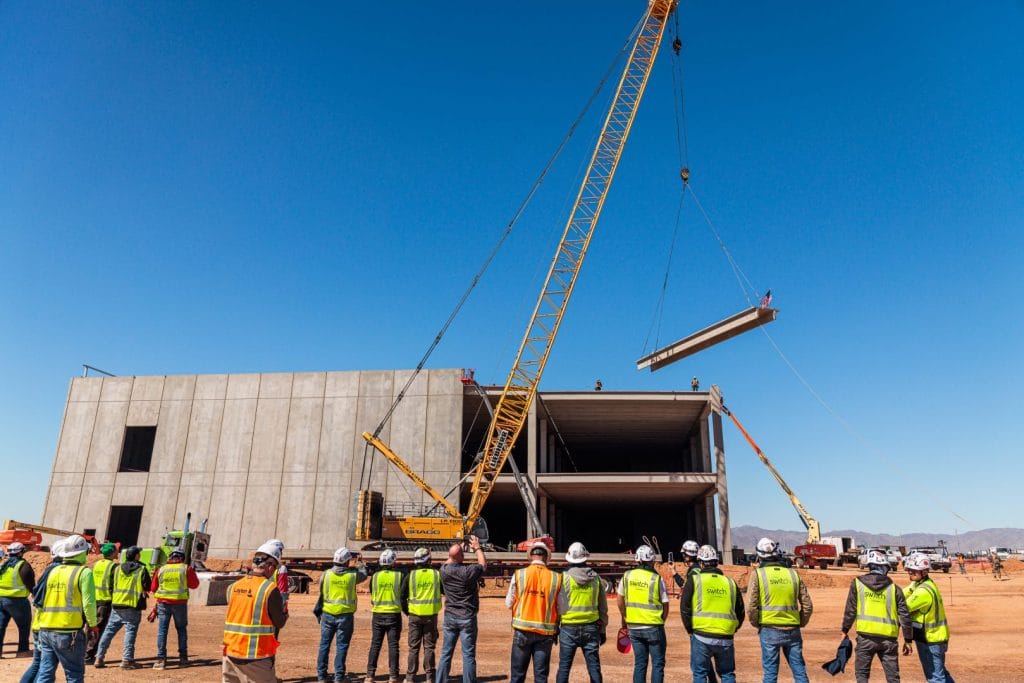
During development and construction, projects create demand for skilled trades and construction professionals, including electricians, pipefitters, HVAC technicians, welders, project managers, and heavy equipment operators.
Once operational, data centers require teams to support critical facility operations, mechanical systems, physical security, maintenance, engineering, and campus operations.
Data centers also create opportunities for local businesses and service providers, including landscaping, janitorial services, preventative maintenance, hospitality, transportation, and food services.
How Can Someone Start a Career in the Data Center Industry?
The data center industry offers opportunities for people from many professional backgrounds, including skilled trades, engineering, military service, operations, facilities management, and technology.
Many roles focus on mechanical, electrical, and operational expertise rather than traditional software or IT experience. Veterans and individuals transitioning from industrial or technical fields often bring highly transferable skills to the industry.
To explore career opportunities at Aligned, visit Aligned Careers.
How Does Aligned Work With Local Communities?
At Aligned, community engagement begins long before construction starts. Our approach focuses on working collaboratively with local stakeholders, understanding community priorities, and maintaining open communication throughout development and operations.
We refer to this philosophy as our “More Than Megawatts” approach. It reflects our commitment to supporting the communities where we operate through responsible development, local partnerships, workforce opportunities, and long-term investment.
Beyond the campus itself, Aligned supports community organizations, local initiatives, and programs that contribute to regional growth and quality of life.
Are Data Centers Safe for Communities?
Yes. Modern data centers are designed and operated under strict safety, security, and environmental standards.
Compared to many large industrial facilities, data centers typically generate minimal traffic, limited daily activity, and low levels of disruption to surrounding areas. Facilities are continuously monitored and operated by trained personnel using defined operational procedures and emergency response protocols.
How Do Data Centers Maintain Safety?
Data centers maintain safety through continuous monitoring, controlled operations, preventative maintenance, defined procedures, and ongoing training.
Facilities regularly conduct drills and coordinate with internal teams, contractors, and local emergency responders to ensure preparedness and consistent response protocols.
At Aligned, safety planning includes operational training, emergency response coordination, and site-specific procedures designed to support both employees and the surrounding community.
Why Do Data Centers Work With Local Emergency Responders?
Early coordination with local emergency responders helps ensure familiarity with the facility, site layout, safety systems, and operational procedures.
This collaboration supports faster and more effective emergency response while strengthening communication and preparedness between facility teams and local agencies.
Are Data Centers Loud?
Modern data centers are designed to operate as quiet neighbors.
At Aligned, facilities incorporate acoustic mitigation measures, equipment setbacks, and sound-reduction technology designed to minimize noise impacts on surrounding areas. Backup power equipment is housed within acoustically treated enclosures, and routine testing is carefully managed to remain compliant with local sound requirements.
Construction activities are also managed under defined noise mitigation plans that may include designated work hours and operational controls.
Do Data Centers Use a Lot of Water?
Water use depends heavily on the design of a data center’s cooling system. Older facilities often relied on evaporative cooling systems that consumed significant amounts of water.
Aligned uses an air-cooled heat rejection system combined with a closed-loop cooling design that continuously recycles the same cooling fluid within a sealed environment. Water is primarily required during the initial system fill and for periodic maintenance.
Following initial system setup, facility water use is generally limited to standard domestic uses such as restrooms and employee amenities.
In Northlake, Illinois, local officials noted that Aligned’s two-building campus used less water than some nearby commercial businesses, including local laundromats and car washes, during the same period.
Do Data Centers Increase Energy Costs?
As digital demand grows, questions around energy use and grid capacity are understandable.
Several studies have shown that large energy users can also contribute to long-term grid investment and infrastructure improvements. In many cases, data center operators directly fund substations, transmission infrastructure, and other utility-related upgrades.
Aligned has invested in infrastructure projects designed to support grid reliability, including a Battery Energy Storage System (BESS) project in Hillsboro, Oregon, developed in coordination with the local utility.
What Is the Environmental Impact of a Data Center?
Modern data centers are increasingly designed to improve energy efficiency, reduce water consumption, and support broader sustainability goals.
Many facilities incorporate advanced cooling technologies, energy-efficient infrastructure, renewable energy strategies, and utility partnerships aimed at reducing environmental impact while supporting growing digital demand.
Environmental performance varies by facility design, operational practices, energy sourcing, and regional infrastructure.
How Much Traffic Do Data Centers Create?
Compared to many industrial or commercial developments, data centers typically generate relatively low daily traffic volumes once operational.
Most traffic occurs during construction phases or scheduled maintenance activities. Day-to-day operations generally involve limited employee traffic, vendor visits, and service vehicles.
Why Are Data Centers Built in Certain Locations?
Data center locations are influenced by several factors, including access to power infrastructure, fiber connectivity, land availability, environmental considerations, and proximity to customers and population centers.
Communities with strong infrastructure and long-term growth potential are often attractive locations for digital infrastructure investment.